
⏱️ Read time: ~ 6 minutes
There are three common types of “food trucks” depending on what kind of food business you run: the full food truck, the trailer, and the small push cart. In the US and Europe, people simply call all of them food trucks.
Today, I’ll break down for you:
- which size works best for different food concepts,
- how much budget each type usually requires,
- and how to customize a unit in a way that’s more cost-effective and efficient than buying locally.
Food Truck
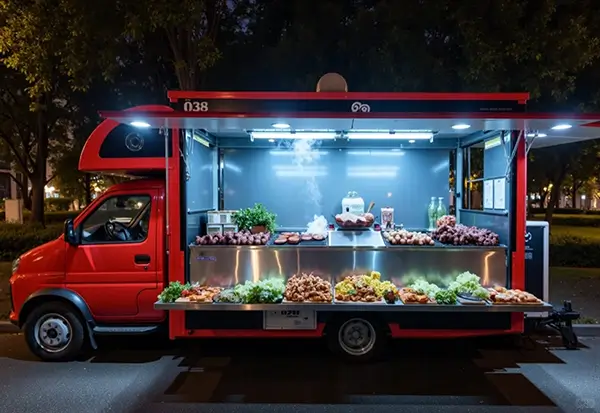
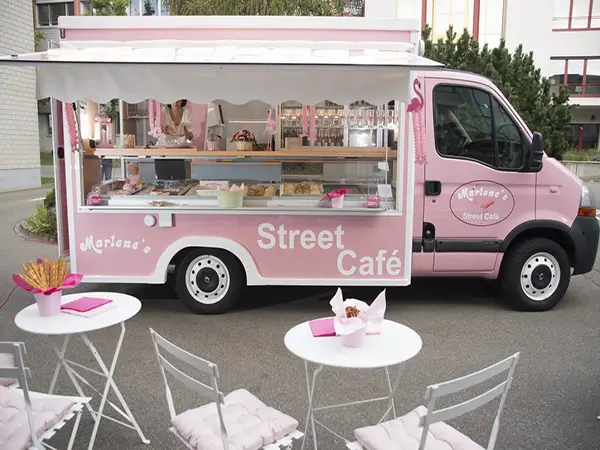
A food truck is basically a fully built kitchen on wheels. You drive it anywhere, park, and start serving. Super flexible and easy to move around.
💰 Cost: Buying an used food truck locally usually runs $30,000–$100,000. A brand-new custom build typically starts around $100,000–$200,000.
- Mexican Street Food / Taco Truck
For tacos, burritos, and other hand-held Mexican street food, the setup is simple: low food cost, fast prep, and quick turnover.
Most sellers use a 14–18 ft food truck, which is big enough for all the essentials—a flat-top griddle, a warming box, and a small fridge.


- BBQ & Smoked Meats Truck
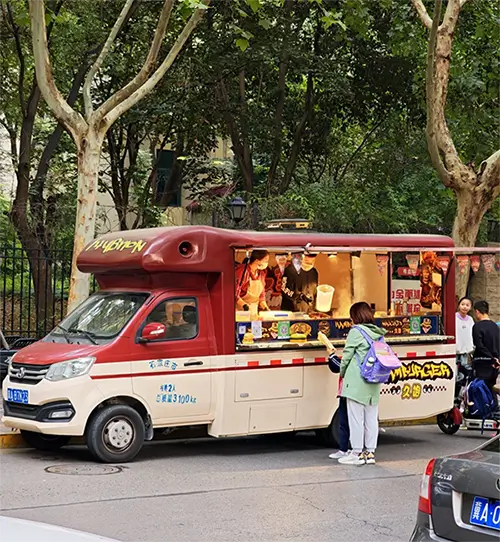
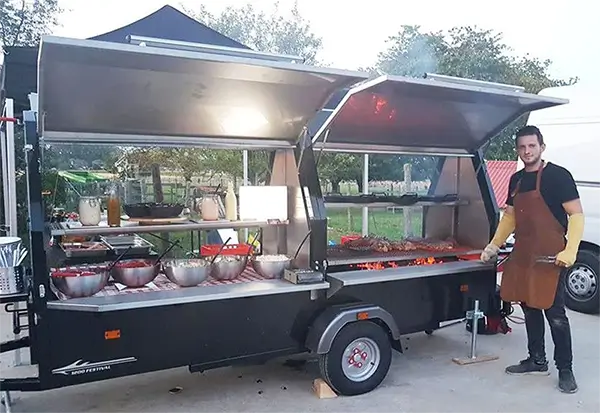
American BBQ and smoked meats need a lot more kitchen space, which is why most sellers go for an 18 ft+ step van or a 20 ft trailer. You’ll need enough room for the smoker, the grill, and proper storage for all the meats.
- BBQ & Smoked Meats Truck
American BBQ and smoked meats need a lot more kitchen space, which is why most sellers go for an 18 ft+ step van or a 20 ft trailer. You’ll need enough room for the smoker, the grill, and proper storage for all the meats.
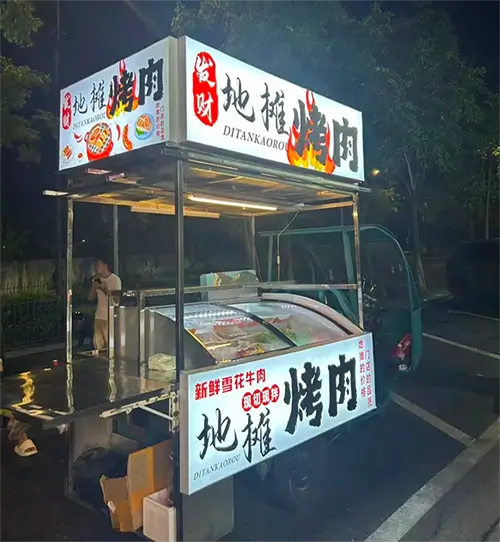
If you’re only doing simple skewers or light grilling, a smaller truck can work — just keep in mind the limited space means lower output.
- Pizza Truck
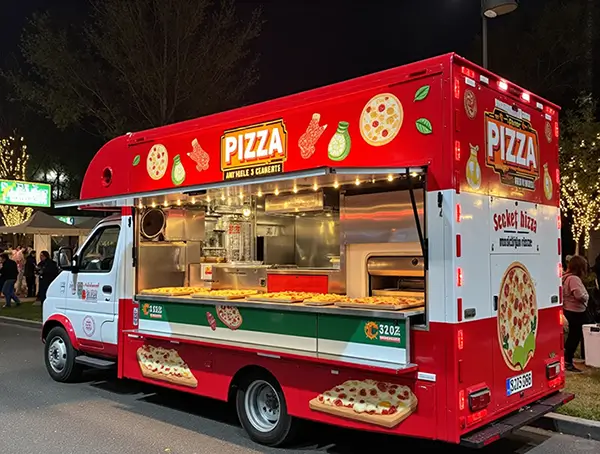
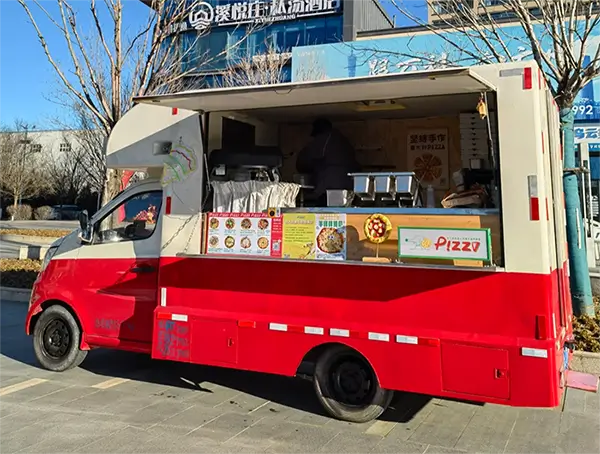
The oven is the heart of a pizza truck. Whether it’s wood-fired or electric, it takes up a lot of space. Most operators use an 18 ft+ step van or a mid-size trailer to fit the oven comfortably.
The rest of the setup is fairly simple, but you still need enough room to move around.
- Korean Fusion Truck
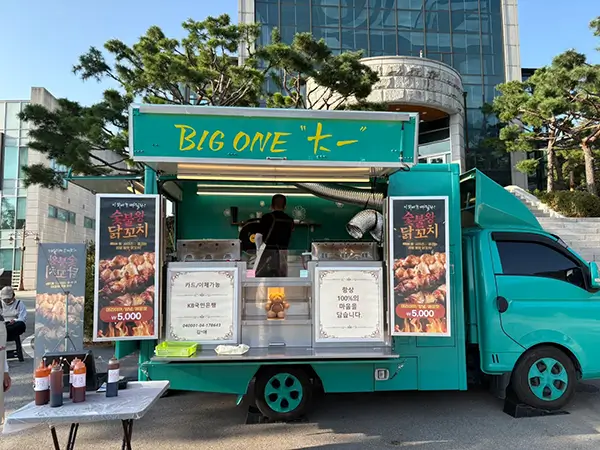
For Korean fried chicken, bulgogi bowls, and similar menus, you’ll need a flat-top griddle and a fryer. A 16 ft step van is usually enough.
The cooking area doesn’t need to be huge, but good ventilation is essential.

- Coffee Truck / Dessert Truck
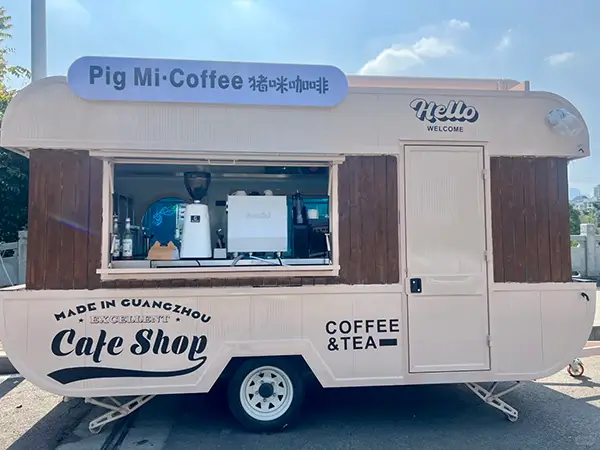
These setups are lightweight and don’t require much space. Most owners use a Sprinter van or a 12–14 ft small truck.
Your core equipment will be a coffee machine, grinder, small fridge, and a simple work counter.
Limitations:
The biggest downside of a food truck is the maintenance cost. Since it has an engine, any mechanical issue can be very expensive to fix.
Food Trailer
💰 Cost: A brand-new custom trailer usually costs $20,000–$100,000, while used units typically fall in the $10,000–$50,000 range.
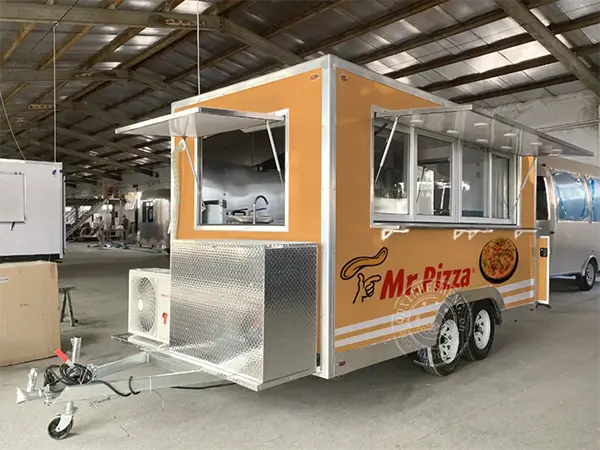
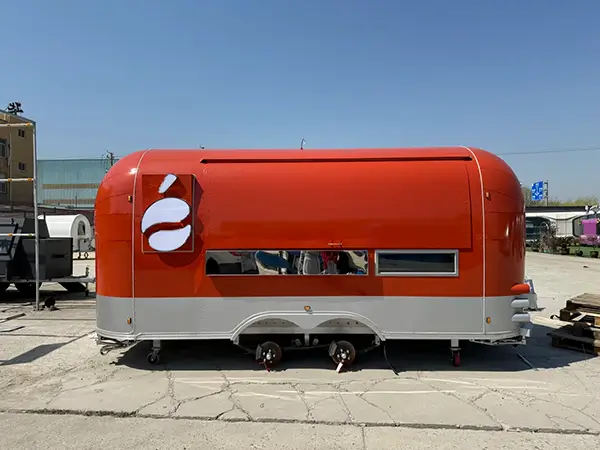
A food trailer is basically a kitchen cabin that needs to be towed by a pickup or a van. It’s great for semi-fixed locations such as weekend markets, food festivals, campgrounds, and tourist spots.
Trailers offer more space and higher weight capacity, allowing you to install equipment that wouldn’t fit in a regular food truck. Besides the setups mentioned above, trailers are ideal for smoked meats, large pizza ovens, seafood dishes, and any menu that requires multiple pieces of cooking equipment working together.
Limitations:
Parking can be restrictive. Trailers are longer and take up more space, so you generally can’t park them on the street.
Food Cart
💰 Cost: A brand-new food cart usually costs $5,000–$15,000, while used ones range from $2,000 to $8,000. The trial-and-error cost is low.
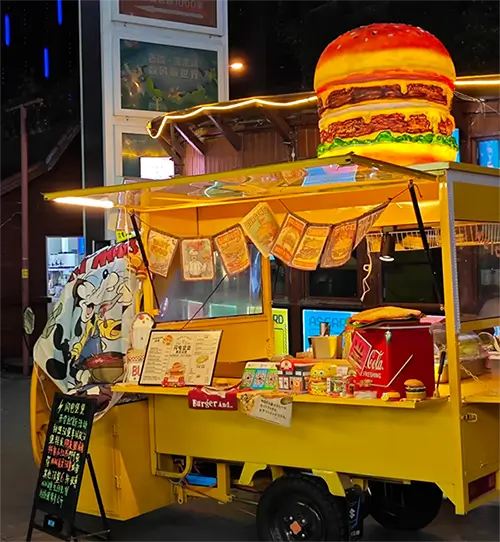
Food carts (including small three-wheel carts) are the lightest way to get started. You’ll see them by parks, schools and busy sidewalks, mainly selling coffee, ice cream, simple snacks or packaged foods. They’re easy to run and much cheaper than a full-size truck or trailer.
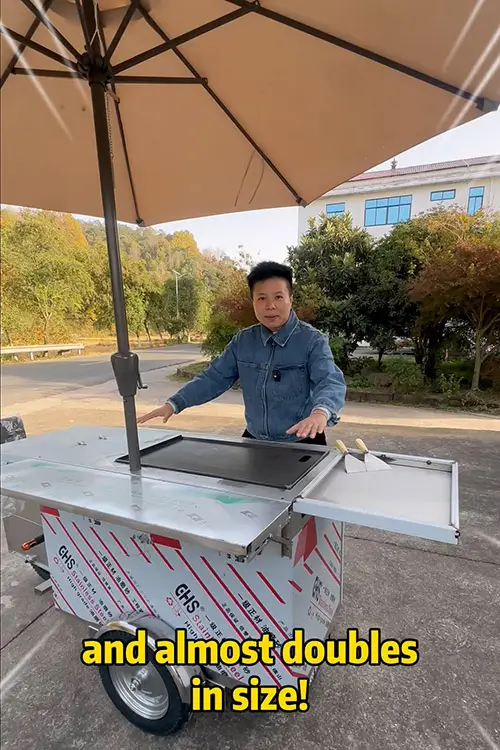
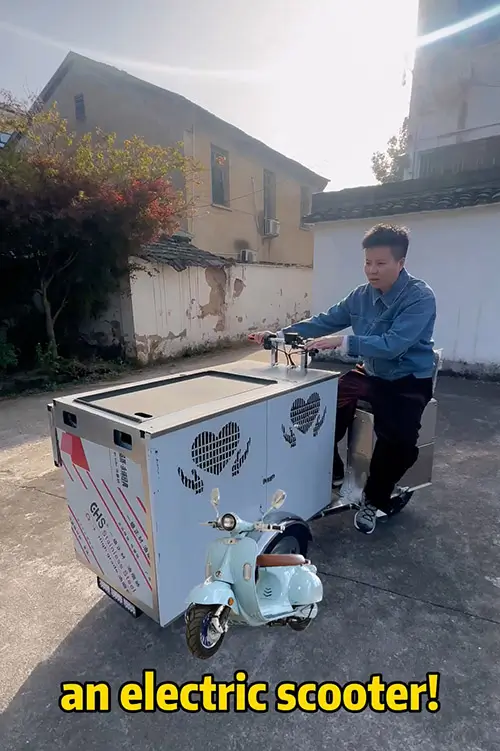
We’re also seeing more demand for compact carts like this electric ride-on folding food cart we recently built for a client. It has a small footprint but still fits a flat-top griddle, side prep counter, and storage space.
Limitations:
Space is extremely limited. You can’t do complex cooking — only pre-made items or foods that require simple reheating.
Here’s a quick price reference for buying locally:
|
Type
|
Brand-New Custom
|
Used & Ready
|
Empty Shell
|
|---|---|---|---|
|
Truck
|
$100K–$200K
|
$30K–$100K
|
$5K–$20K
|
|
Trailer
|
$20K–$100K
|
$10K–$50K
|
$5K+
|
|
Cart
|
$5K–$15K
|
$2K–$8K
|
$500–$2K
|
💡 :Swipe left to view more.
If You Decide to Buy Locally
In many Western countries, family-run businesses and street-food sellers usually start like this:
They first browse platforms such as Craigslist, Facebook Marketplace, and UsedVending, or visit local used-truck lots to buy a retired step van or an old food truck with minimal modifications. Prices typically start around US$25,000, but that usually doesn’t include any kitchen equipment.
Next, you’ll need to shop on WebstaurantStore or Katom for stoves, fryers, fridges, hoods, sinks, and other kitchen essentials. Then comes installation — ventilation, plumbing, electrical work, flooring, all handled by different contractors.
A proper custom build-out alone can cost US$20,000–40,000, with a timeline of 8–16 weeks. And if you need to wait for electrical, fire-safety, and health inspections, the whole process can easily stretch into several months.
But PackJing Makes It Simple, Affordable, and Efficient
PackJing is based in one of China’s largest manufacturing hubs, and we build food trucks in a fully integrated, one-stop workflow.
Based on your food concept and budget, we customize the truck size and full equipment setup — cooking appliances, refrigerators, stainless-steel worktables, water & electrical systems, ventilation, plus all your food packaging (cups, bowls, takeout bags).
Because all suppliers are concentrated in the same area, the total cost is typically at least 50% cheaper than buying locally.
In Western markets, most food trucks still run on traditional fuel, with step vans being the most common. But once you try to import a fuel-powered truck, you face full automotive certification, high compliance costs, and complicated paperwork — not to mention future maintenance challenges.
In recent years, with rising fuel prices and stricter low-emission regulations, electric food trucks have become more popular. PackJing focuses on electric models for exactly this reason: they’re easier to deploy, more cost-efficient, and simpler to maintain.
Another reason food trucks are expensive in the US/EU is the kitchen equipment.
Chinese-made equipment with NSF certification can cost half the price of Western brands. In most cases, you don’t need the “most expensive” option — you just need something safe, reliable, and efficient.
If you’re ready, just reach out — we’d love to chat about your project.