
⏱️ Read time: ~ 7 minutes
When selecting pouch packaging, the structure often outweighs the appearance, as it has a direct impact on filling processes, shelf presentation, and overall costs.
In this article, we’ll dive into the basics of pouch types, breaking down the structural differences and materials of commonly used pouches.
We’ll also explore the various accessories and features that can be added, all through practical real-world examples.
How Are Pouches Classified By Structure?
In practical applications, stand-up pouches are typically classified into three common types based on their bottom and side structure.
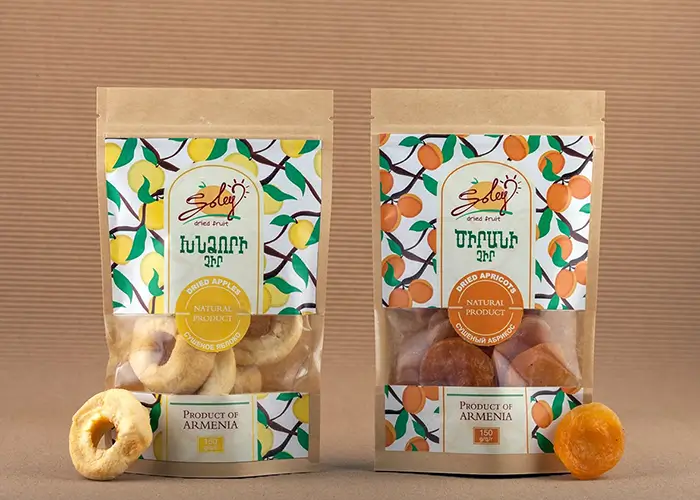
- Bottom Gusset Stand-Up Pouch
This is the most common type of stand-up pouch. It features a gusseted bottom, which unfolds when filled, allowing the pouch to stand upright.
Its structure is relatively simple and versatile, with both the front and back surfaces available for printing, giving it a classic and attractive look.
Best for: Snacks, candies, nuts, powders, and other general-purpose packaging needs.
- Flat Bottom Pouch
Also known as a box pouch or eight-side seal pouch, this type features a flat bottom that, when filled, allows the pouch to stand like a small box.
The shape is sturdy and well-defined, with plenty of surface area on the front, back, and sides for displaying graphics or information.
Best for: Coffee beans, nuts, pet food, snacks, and products that require upright display and more space for branding or messaging.
Cost: Typically 10%-25% higher than a regular bottom gusset stand-up pouch.

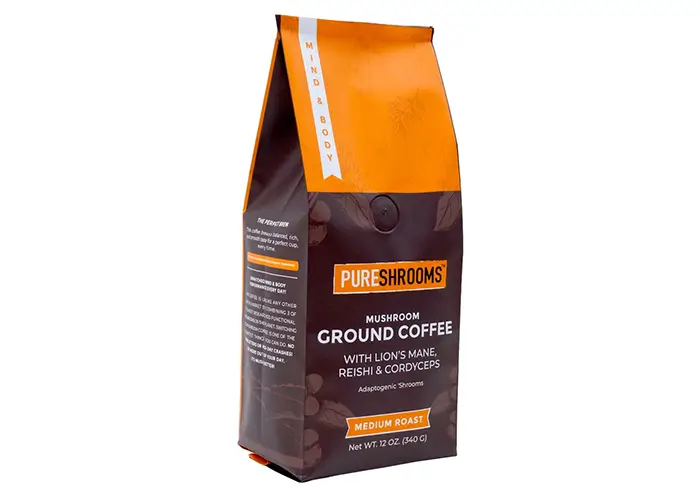
- Side Gusset Pouch
Known as a side accordion pouch, this style has gussets on the sides that expand when filled, making the pouch thicker and offering more space.
The front is usually narrower than a flat bottom pouch, but the capacity remains substantial, with a more vertical shape. Both the front and back can be fully printed, while the sides are primarily structural.
Best for: Coffee, tea, grains, dried goods, and other products that require larger capacity and vertical display.
Flat Pouches
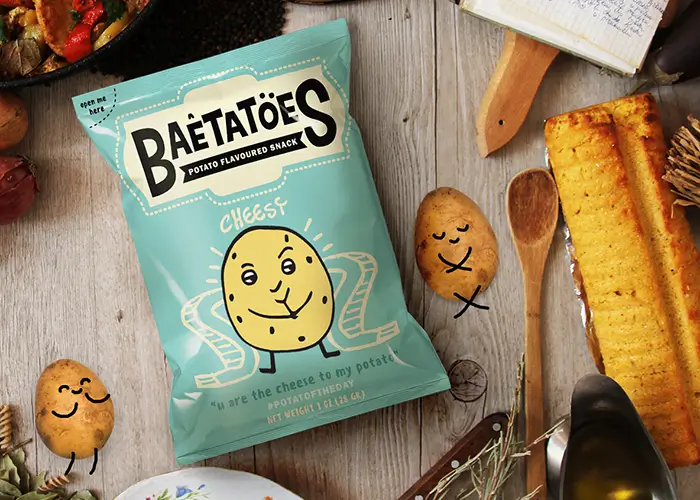
- Pillow Pouch
The pillow pouch has a bulging center and sealed ends, giving it the shape of a small pillow. It’s highly adaptable, making it perfect for packaging various shapes and sizes of products.
This pouch type is commonly used in automated packaging lines and is ideal for high-volume, standardized small packaging.
Best for: Candies, chips, small snacks, single-serving food items, and anything that needs a compact, easy-to-package format.
- 3-Side Seal Pouch
As the name suggests, this pouch has seals on three sides, with one side featuring a fold-over edge at the bottom. Compared to the 4-side seal, it offers more capacity, making it easier to store and transport.
Best for: Ground foods, coffee, snacks, spices, pet food, and products in granular or powdered form.
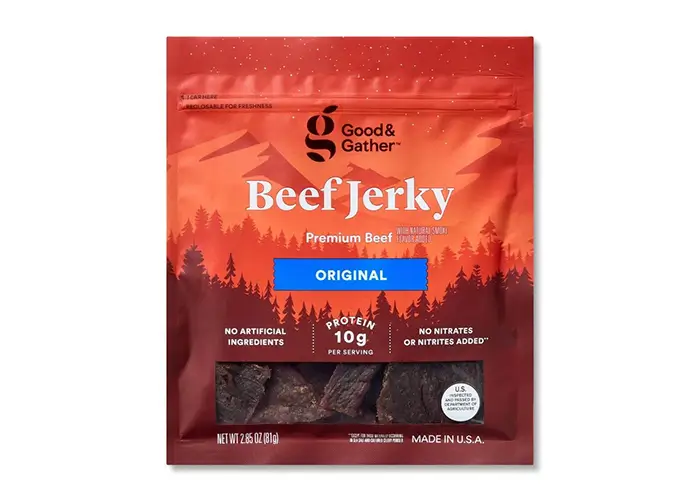
- 4-Side Seal Pouch
This pouch is sealed on all four sides, offering a stronger barrier against leaks. Both the front and back can be custom printed, but the structure is less flexible than the pillow pouch, making it ideal for situations where sealing and leak protection are critical.
Best for: Liquids, medical supplies, sample packaging, and any product that requires extra leak protection.
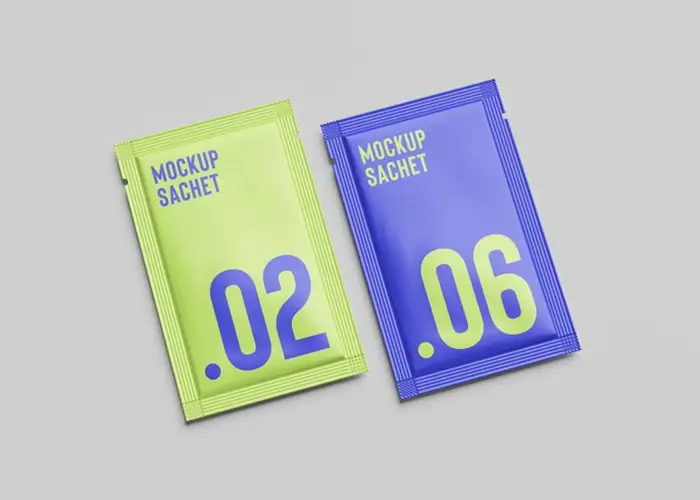
Shaped / Die-Cut Pouches
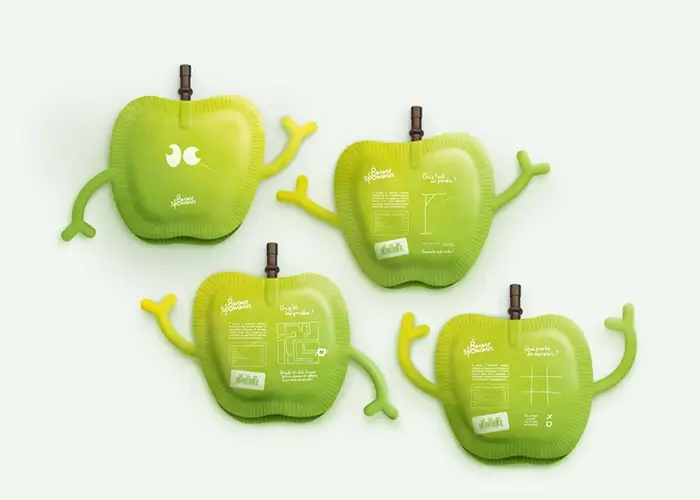
These pouches feature non-standard shapes, created through die-cutting to form a specific design. They stand out on the shelf, offering high visibility and are perfect for grabbing attention. However, they require more attention to design and production details.
Best for: Promotional products, limited editions, and co-branded items.
Cost: Typically higher than standard pouch types, depending on the complexity of the shape and mold requirements.
What Material Options Can You Choose for a Pouch?
Most pouches are not made from a single material; they consist of a multi-layer structure combining different materials to create soft packaging.
- Outer Layer (paper/plastic): Responsible for printing and appearance, while providing basic structural support.
- Middle Layer (Aluminum foil, VMPET, EVOH Barrier): Provides protection against air, moisture, and light.
- Inner Layer (PE): Responsible for heat sealing and direct contact with the product.
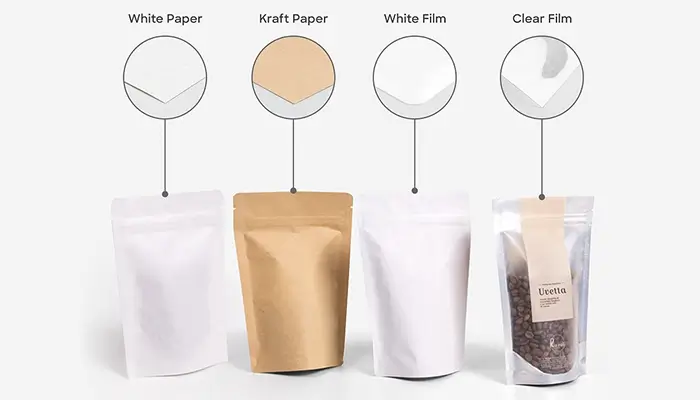
The choice of outer layer material plays a significant role in the final appearance of the packaging. The four most common options are:
Plastic Film
This is the most common outer layer material, primarily made of PET (Polyester) and BOPP (Biaxially Oriented Polypropylene).
Both white film and clear film are essentially plastic films, with the white film being opaque due to material or coating, while clear film retains the natural transparency of the material. They have a smooth surface, making them suitable for high-quality printing and providing good abrasion resistance.
Kraft Paper
Kraft paper offers a natural, paper-like appearance. While it has some moisture resistance, its water resistance and strength are still lower compared to other materials. Paper-based outer layers are typically around 20% more expensive than standard plastic film.
White Paper
White paper has a cleaner, more uniform visual look. It’s simpler and more refined than kraft paper, offering more stable print results, making it ideal for clean layouts and high-contrast designs.
Bio-based Film
Bio-based films are made from plant-based materials, like PLA. They offer an eco-friendly option for brands with material requirements. While the appearance is similar to plastic films, their cost is around 30% higher.
Once the outer layer material is chosen, we select the appropriate middle layer barrier material based on your product’s needs for moisture, oxygen, light protection, or shelf life, and then choose the inner layer heat-sealing material accordingly.
What Functional Options Can You Add to a Pouch?
Once you’ve chosen the basic pouch type and material, the next step is to select the right functionalities and accessories based on how the product will be used.
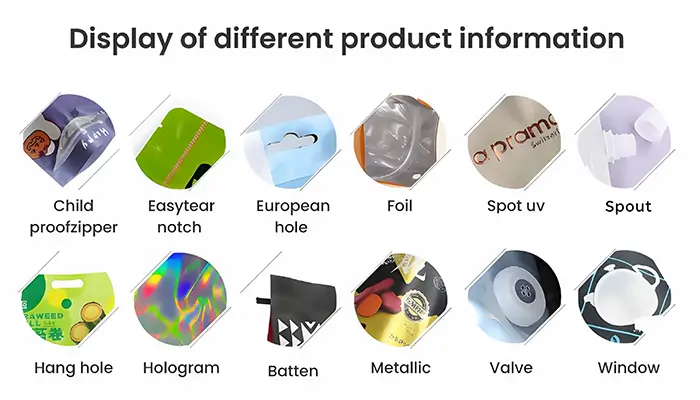
Opening & Resealing
- Child Proof Zipper: A zipper designed to prevent children from opening the pouch.
- Easytear Notch: A tear notch at the top of the pouch for easy opening without the need for tools.
- Spout: A spout design for easy pouring of liquids or semi-liquid products.
Display & Presentation
- European Hole: A hole designed for hanging the pouch on shelves or display racks.
- Spot UV: Spot UV printing to highlight specific areas of the pouch for a glossy effect.
- Hologram: Holographic printing technology to enhance brand recognition.
- Metallic: A metallic surface finish for a premium look.
- Window: A transparent window design to display the contents of the pouch directly.
Protection & Freshness
- Foil: A foil layer that enhances the pouch’s barrier properties, commonly used to keep food fresh.
- Valve: A valve design that allows gases to escape from the pouch, preventing over-pressurization inside.
Structure & Support
- Batten: A support bar that adds stability to the pouch.
- Hang Hole: A hole for hanging the pouch, making it easier to display on shelves.
Ready to Create Your Custom Pouch?
At PackJing, we have years of experience providing packaging solutions , specializing in custom pouches for brands. From structure and material selection to accessories and sealing equipment, our team of experts will work closely with you to ensure every detail is perfect.
If you already have a packaging idea, feel free to contact us to discuss the details! If you’re unsure, you can start by browsing our product catalog, chat with us about your packaging needs, or even get a sample to feel it for yourself!
FAQ
What Is a Pouch?
A pouch is a soft packaging bag made from multi-layer film, formed by sealing the edges. It’s commonly used for food and everyday products. Compared to paper boxes or rigid containers, pouches are lighter, take up less space, and use fewer materials.